Why Generic AI Summaries Miss the Mark for Defense Teams
May 2026
·
4 min read
The ABA Task Force on Law and Artificial Intelligence report states that the AI debate in the legal space has moved from whether to use AI to how to use it. For defense teams, the question is more specific: can AI help you find what matters before trial?
Your case doesn’t need condensed narratives provided by generic AI summary tools. It needs provable moments, such as the exact second a witness contradicts themselves, the detail no one else caught, or the inconsistency buried deep in hours of footage.
As a public defender handling heavy caseloads, the challenge is finding those moments in time. You need a tool that helps you find, verify, and clearly present evidence you can actually use in court.
Most AI transcript summarizers are built for just one user
Open any generic AI summary tool. The default summary output is nearly identical across all of them, which includes a TL;DR, a few key points, and a list of action items, if any. That template was designed for one role: a manager who missed a Zoom meeting and is looking for the gist in sixty seconds. For that person, it works.
A public defender reviewing a witness interview or bodycam footage doesn’t need action items. You need evidence buried at minute 44. When AI smooths transcripts into clean prose, it strips out what matters most, such as verbatim language, pauses, tone shifts, and contradictions.
Every summary reflects a decision about what matters. Generic AI transcripts make that decision for you, before you’ve had a chance to review the discovery yourself.
What defense teams need from AI summaries
Defense teams require summaries where every claim can be verified in court.
If you cannot trace a claim back to a specific second in the recording, it is only an interpretation, and interpretations do not hold up as evidence.
Public defense work depends on:
- Verbatim language, instead of a paraphrase
- Traceability back to the source
- Context around how something was said, not just what was said
These requirements become even more important because legal evidence takes many different forms. A 911 call, a custodial interrogation, and bodycam footage each require different ways of reading and interpreting what’s happening.
You need a tool that accounts for those differences and helps you map evidence across large volumes of discovery.

How Reduct approaches summaries differently
Reduct is designed around the way defenders review discovery, connect facts across records, and build a case.
1. Discovery-specific summaries
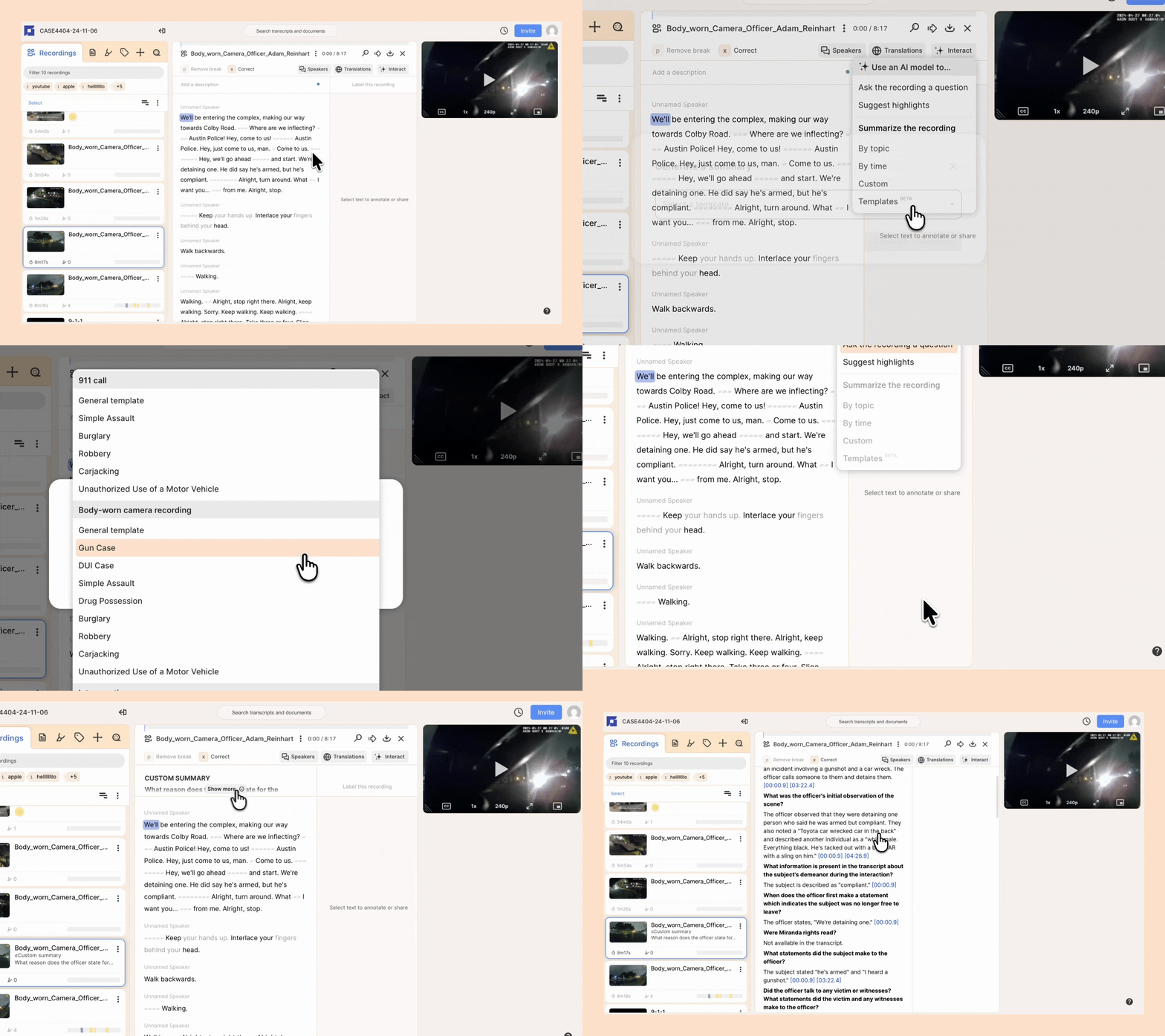
Reduct’s custom summary templates are structured by case type—assault, robbery, firearm offenses, DUI, drug possession—so you start with the questions that matter for that case. They’re built for the files you frequently work with:
- Bodycam footage
- 911 calls
- Interrogations
- Forensic interviews, and more
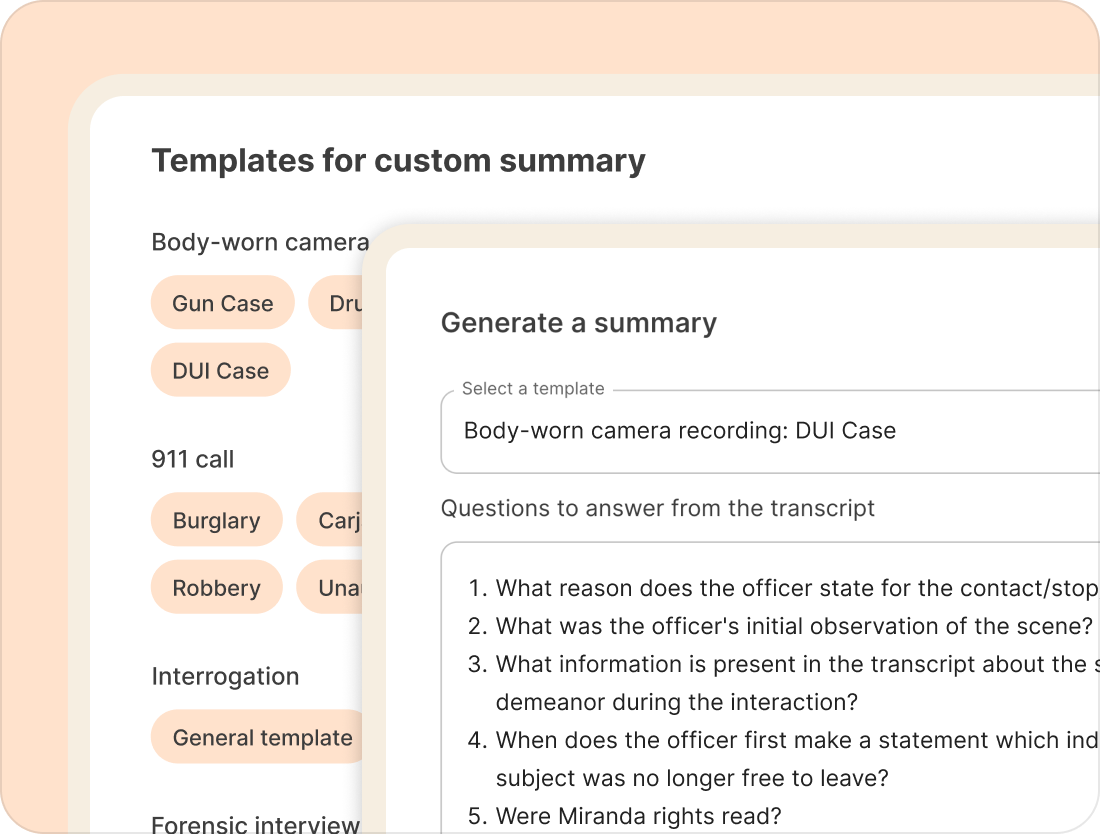
You can also guide the AI directly by summarizing by time range, topic, or your own custom questions, so the output reflects your strategy rather than a generic template.
2. Verifiable summary points
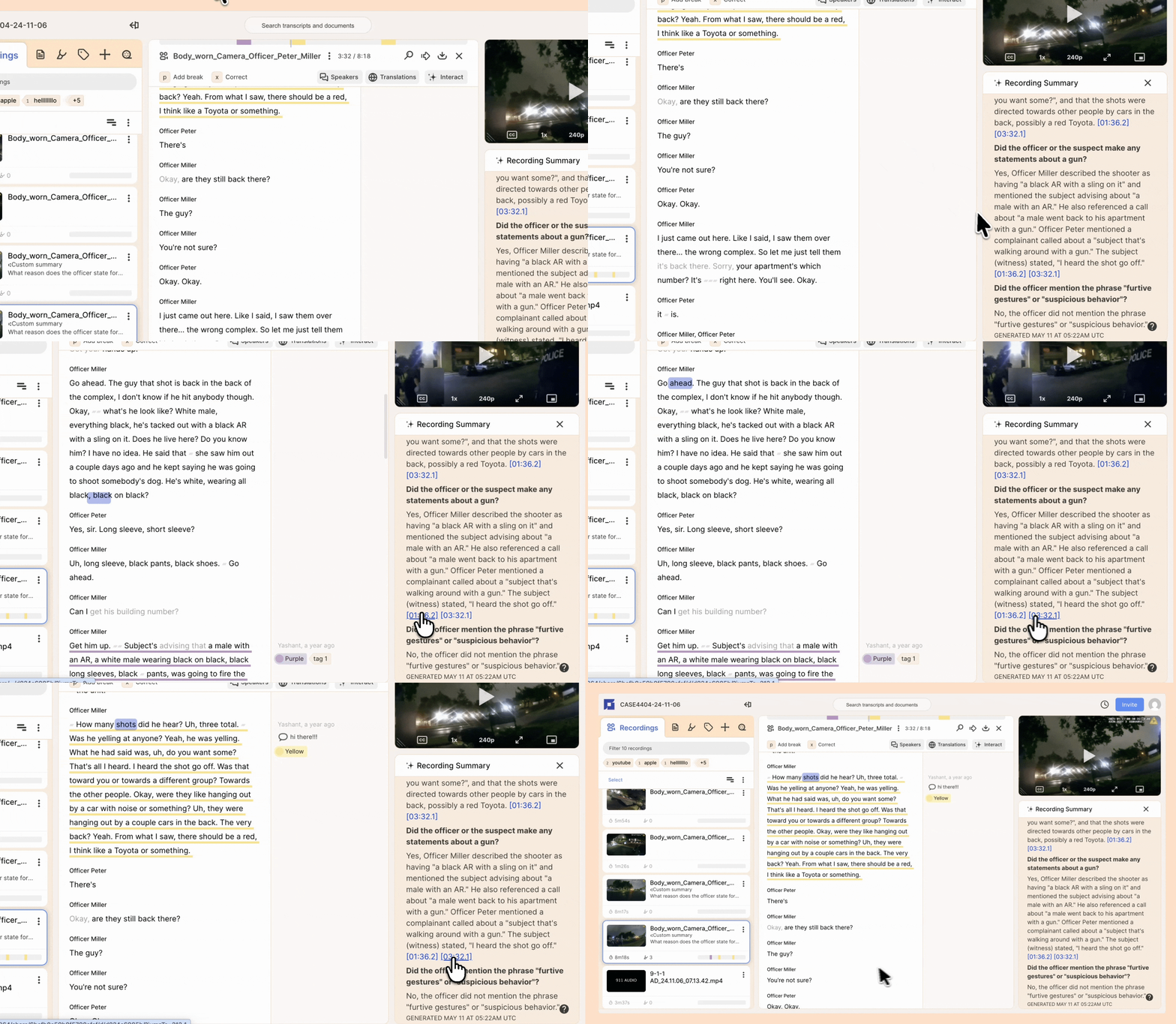
Every summary point links back to a clickable timestamp in the original recording. Instead of just trusting the summary, you can instantly verify it.
Reduct integrates verification directly into the same workflow used for searching, reviewing, and exporting evidence, eliminating constant switching between tools under time pressure.
3. From discovery to verdict: a unified workflow
Most tools store summaries. Reduct helps you build a case. Instead of reviewing recordings one by one, you can process entire sets of discovery at once, surfacing patterns and inconsistencies across recordings in minutes.
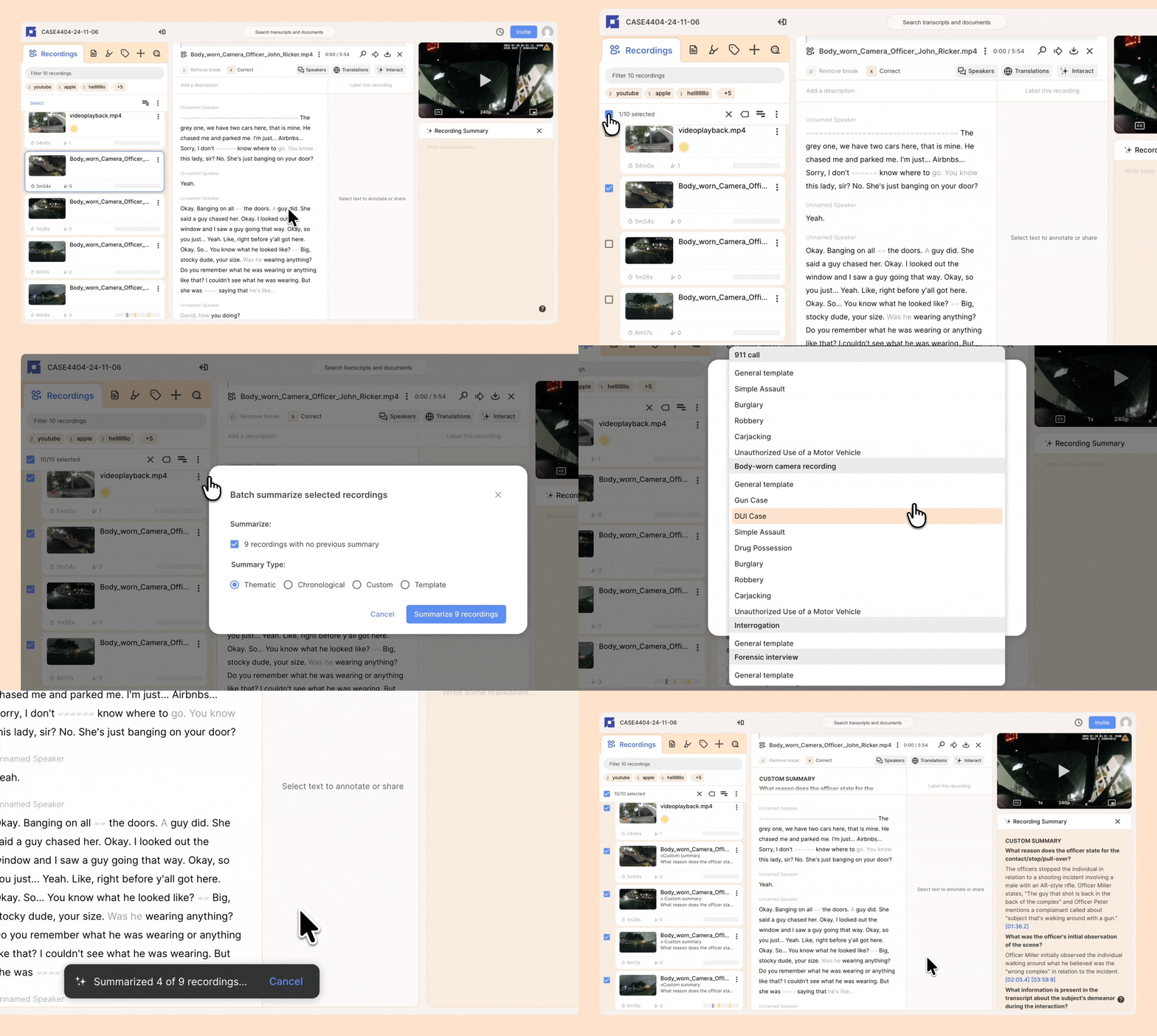
- Batch summaries: Attorneys can summarize all recordings in a project at once, with multiple summary types, just like for a single recording. This enables fast, consistent summaries across interviews and hearings, helping you process large caseloads, surface critical details, and prepare stronger cases more efficiently.
- Searchable moments: You can search thousands of hours of audio for a single phrase. Example: A defender in Aurora discovered a specific racial slur buried hours deep in bodycam audio using Reduct. That single, searchable moment became the pivot point for a not-guilty verdict.
- Instant verification: Every word in the transcript is a play button. One click jumps you to that exact millisecond of video, allowing for instant context checks.
- Easy exports: Once you find a critical moment, you can pull it directly from the transcript into a captioned video exhibit ready for court in minutes, not hours.
What to look for in an AI summary tool for public defense
Before choosing any AI tool for public defense, you need to know what differentiates a reliable tool from a generic one. Our Ethical Cloud and AI Vendor Selection for Criminal Defenders toolkit outlines the standards worth holding any vendor to, and here's how that applies specifically to AI summary tools:
- Guided by your questions. You define what matters; the AI responds to that input.
- Verifiable against the source. Each point links back to the original recording for quick verification.
- Reviewed by you. The AI drafts, but you review it based on your legal judgment.
- Fits your workflow. It adapts to how you already review, organize, and build cases, rather than forcing a new process.
- Built from real public defender input. It reflects how public defenders actually work with evidence, not just how AI models interpret it.
In short, AI should respond to your questions, but it shouldn’t decide what matters or filter the record for you. Public defense work depends on judgment, context, and accountability, and those decisions should stay in your hands.
Reduct supports that process by helping defense teams search, review, and verify evidence faster without losing sight of the original record. If your team is exploring how AI can support discovery review and case preparation, reach out to know how Reduct can improve your workflow.
TALK TO A PUBLIC DEFENDER
We're on your team
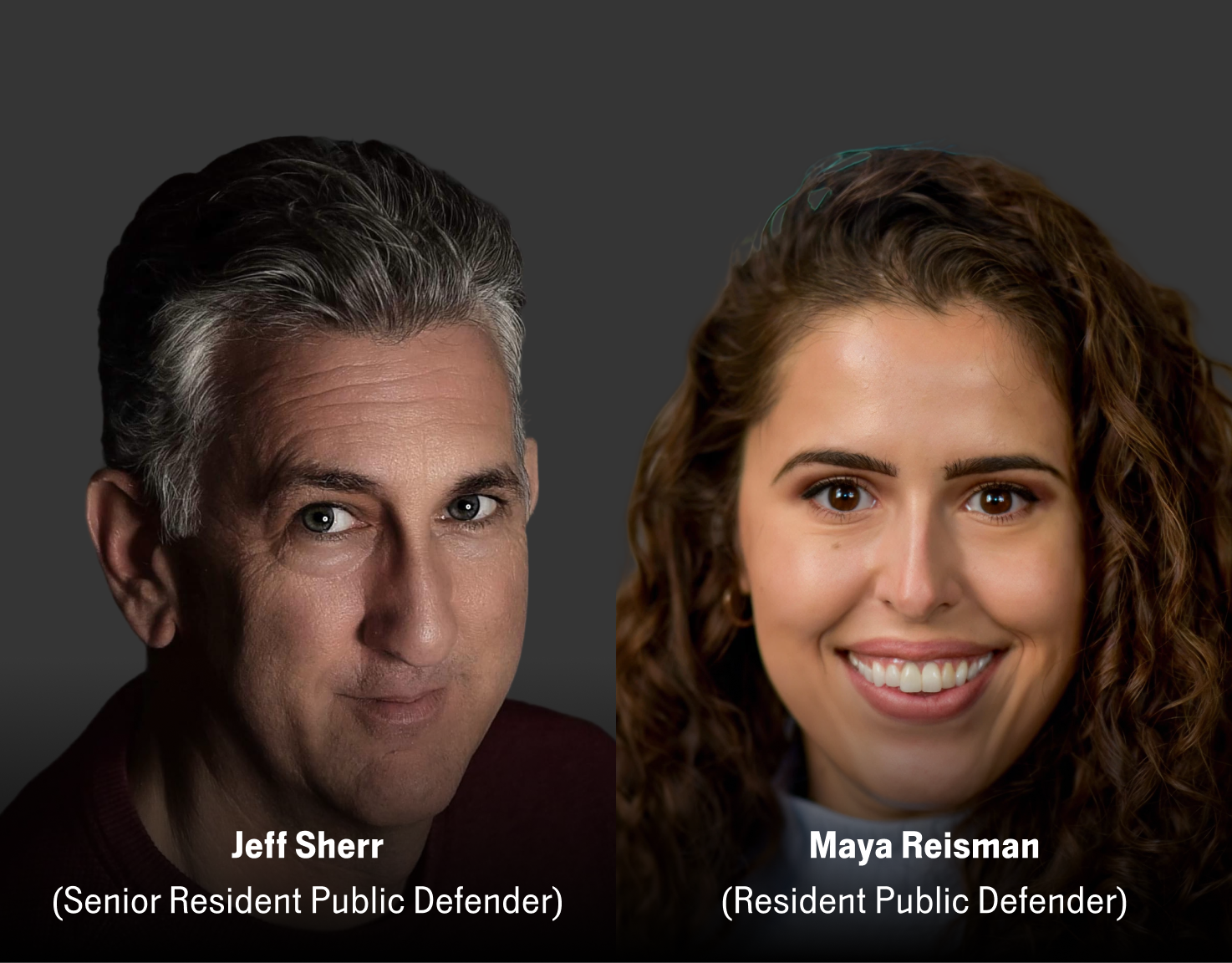
We believe the people building tools for defenders should understand what it actually takes to be one. So we have former public defenders helping us build the product. Have a question about whether Reduct fits your office? We’d love to talk to you.