Why the Legal AI Revolution is Looking in the Wrong Direction
April 2026
·
2 min read
If you’ve been following the legal tech headlines lately, you’d think the goal of AI was to replace the very things we went to law school for: researching case law and drafting motions. Big-name platforms are racing to build tools that research case law, predict judicial outcomes, or draft motions from scratch.
But here’s the thing: We didn’t go to law school to stop lawyering. We went to law school to analyze facts, build narratives, and fight for our clients in court. The "lawyering" is the part we actually enjoy. What we don’t enjoy is the soul-crushing, non-lawyering labor required to even get to the starting line of a case.
The horror stories are real
The "hallucination" problem isn't a theoretical glitch; it’s a career-ending risk. In just the last month, the courts have reached a breaking point with attorneys who outsourced their research to unverified AI:
- Montes v. Suns Legacy Partners:A lawyer was hit with an adverse costs order after submitting a brief containing several fabricated cases and false quotes.
- Amtrust North America v. Liberty Mutual: A New Jersey court imposed a monetary sanction for the use of fabricated cases.
- McCarthy v. DEA: An attorney received a formal reprimand after including AI-generated summaries and fabricated authorities in a brief submitted to the court.
These are serious ethical violations. As ABA Formal Opinion 512 explicitly warns, "lawyers' uncritical reliance on content created by a GAI tool can result in inaccurate legal advice to clients or misleading representations to courts".
The "False Economy" of AI research
There is a fundamental myth that software which finds case law or drafts motions is a time-saver. In reality, it’s often a false economy.
Under our ethical duties of Competence (Rule 1.1) and Supervision (Rule 5.3), we cannot delegate our professional judgment to a machine. If an AI finds ten cases for you, you still have to read every one of those cases, verify they are good law, and ensure the AI didn't hallucinate a holding. If you have to do 100% of the verification anyway, how much time are you actually saving?
When you use AI to "lawyer," you’re just creating a new pile of work for yourself: auditing the AI.
Reduct: Saving real time on non-lawyering tasks
At Reduct, we believe the best use of technology is to take away the "non-lawyering" tasks—the cumbersome, administrative friction that keeps you away from your practice.
Public defenders are drowning in digital evidence, from body-worn camera (BWC) footage to endless jail calls. You shouldn't have to spend your afternoon learning to be a video editor just to clip impeachment material. You shouldn't have to wrestle with proprietary video formats just to see what happened during an arrest.
Our philosophy is simple: Get the lawyer back to lawyering
- We don't write your motions. We help you find the 30-second clip that proves your motion.
- We don't search case law. We search your discovery—transcribing audio and video so you can find the truth in seconds, not hours.
- We don't replace your judgment. We bring you closer to your evidence so your judgment is better informed.
We don't want to write your motions. We want to give you the six hours of your life back that you would have spent wrestling with a video codec, so that you can write the motion with the precision and empathy only a human lawyer provides.
TALK TO A PUBLIC DEFENDER
We're on your team
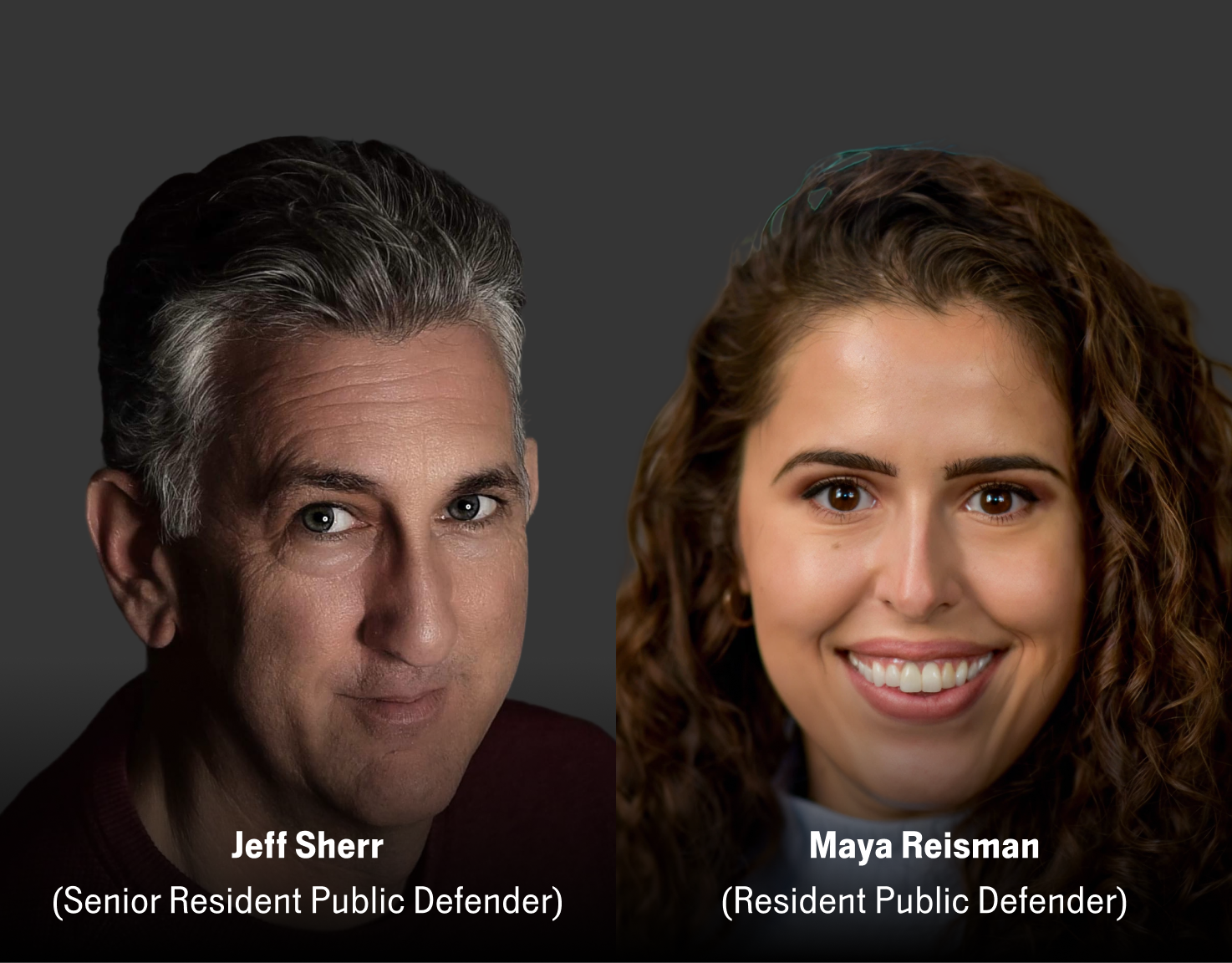
We believe the people building tools for defenders should understand what it actually takes to be one. So we have former public defenders helping us build the product. Have a question about whether Reduct fits your office? We’d love to talk to you.