Four Interpreters, 700 Attorneys: The Language Gap in Digital Discovery
October 2026
·
4 min read
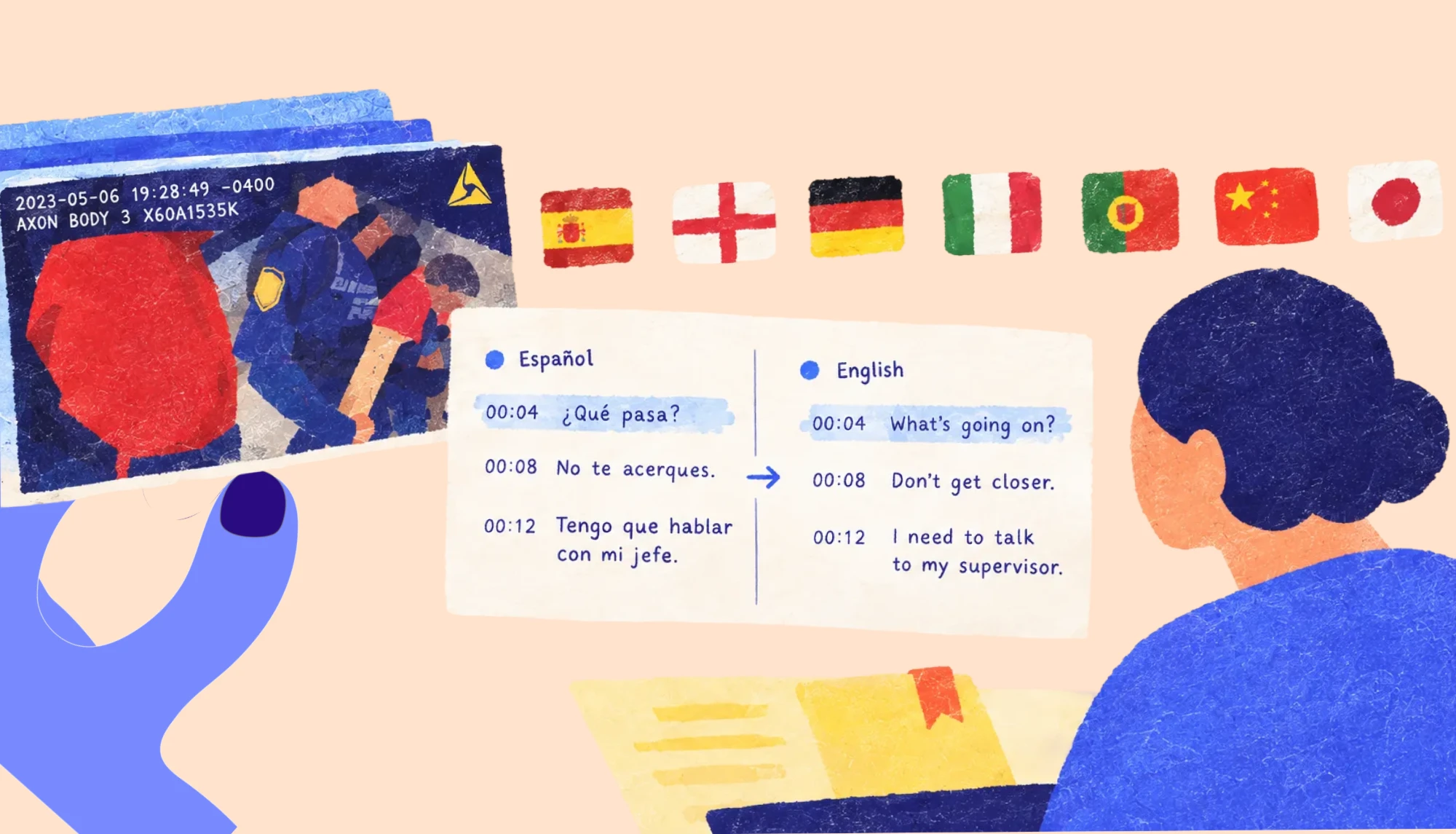
When bodycam footage is in a language you don’t speak, even figuring out what needs a closer look can be a challenge for defense attorneys.
RAND's new workload study of the Los Angeles County Public Defender's Office shows the scale of the problem. The largest public defense office in the country, with more than 700 attorneys serving nearly 10 million people, employs just four full-time Spanish interpreters. Those four people cover interpretation, translation, and interviews for the whole office.
For every other language, attorneys wait on interpreters the court appoints.
The footage was already the heavy part
One incident can have multiple officers on scene, meaning several bodycams, each with its own witnesses and bystanders. When no one on the team speaks the language, attorneys either wait for an interpreter or try to work around it.
RAND found that reviewing multiple bodycams has already increased prep time, as attorneys piece together the same incident from different angles. One attorney put it plainly:
"The amount of body-worn camera footage is obscene; it transforms a low-level case into a medium-level case in terms of workload."
Reviewing bodycam footage is crucial because it can show a client’s behavior in a completely different light than the police report or expose constitutional violations strong enough to get charges dropped. When you wait days for translation, witnesses could move out of state, and crucial evidence may go missing.
Finding those moments quickly can mean changing the course of a case. You just need a good enough translation quickly to tell you what happened so you can act.
Improvising can get risky
RAND found that interpreter availability is limited, and staff prioritizes more serious cases. Lower-priority cases wait longer, leaving you waiting for an interpreter, relying on the English portions, and hoping you’re not missing something.
Attorneys sometimes ask a client's family members to interpret. And this approach comes with two issues:
- Communication suffers and slows down, especially around technical legal terms.
- A family member may be involved in the allegation, or may have reasons to leave out what reflects badly on the family.
If you've made this call, you know the tradeoff. It may be fast and available, but you're relying on someone with a stake in the case to tell you what's on the recording.
What attorneys ask for
When RAND asked what would help, attorneys suggested dedicated staff to watch footage and create transcripts, and they specifically called out non-English recordings. Office computers can already transcribe audio. The language gap is the part attorneys flagged.
Some attorneys expressed caution about delegating the review of body-worn camera footage to support staff. The concern is that if an attorney does not personally watch the videos, they may miss critical small details that could be used during trial to effectively impeach a witness on the stand.
Both these views have a point. You need to see the footage, and you also need a way to get to the right minutes faster, in a language you can read, without waiting weeks for help.
Where the workload numbers fall short
LACPD's Case Complexity System (CCS) adds weight when a client needs an interpreter: 0.20 points for Spanish, 0.30 for other languages. Case-related data like bodycam footage adds 0.025 points per 900 MB, capped at 2 points. Attorneys told RAND that footage can turn a routine case into a highly demanding one, and RAND questions whether those increments keep up.
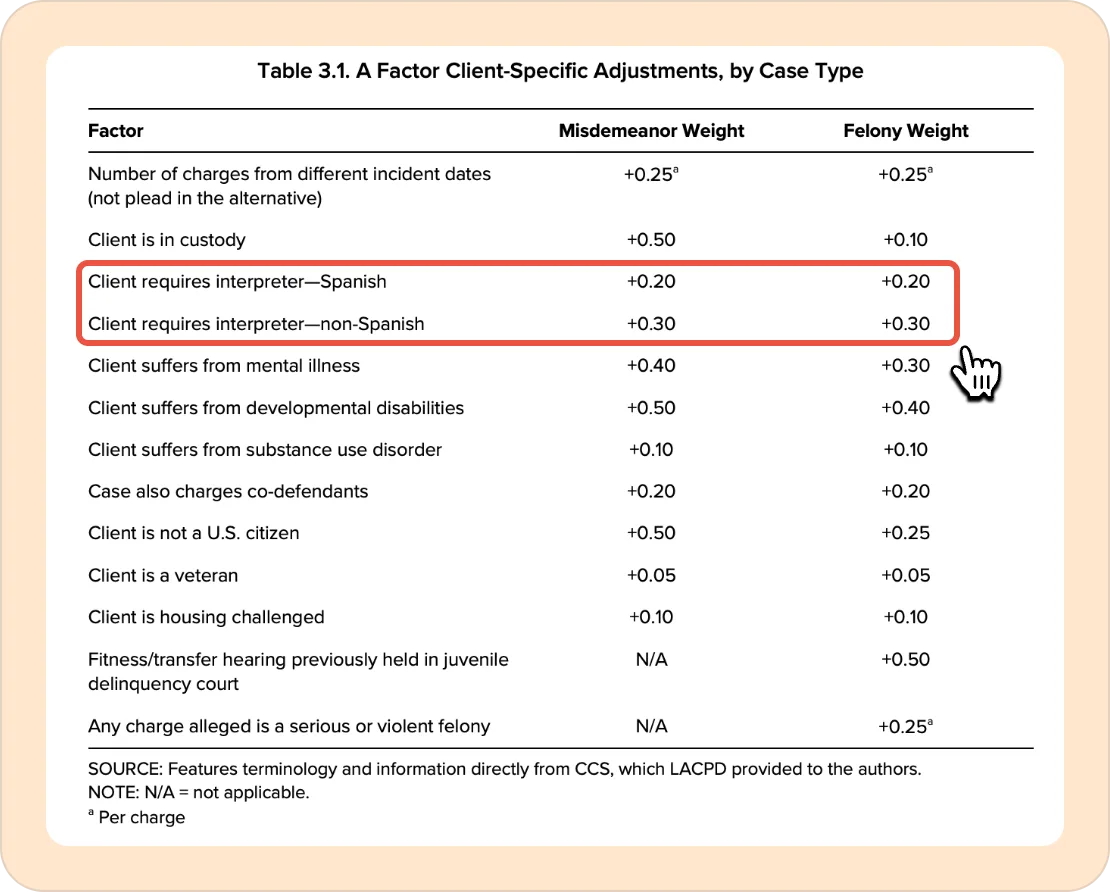
When you look closely at the scoring table, there's another gap. The interpreter factor follows the client's language. The scoring table doesn’t factor in critical things, such as non-English-speaking witnesses and the translation effort for recorded discovery like bodycam or jail calls that need to be translated for the attorney to understand them.
Say you get a case where the client speaks English and the key witness on the footage speaks Cantonese. The complexity score would suggest that the case isn’t too complicated, but you obviously know from experience that the Cantonese translation adds cost and labor to it.
A faster first pass on non-English footage
The fastest way to get ahead of discovery is to understand your footage sooner. Reduct was built to do exactly that. Here's your first pass.
1. Transcription in the original language
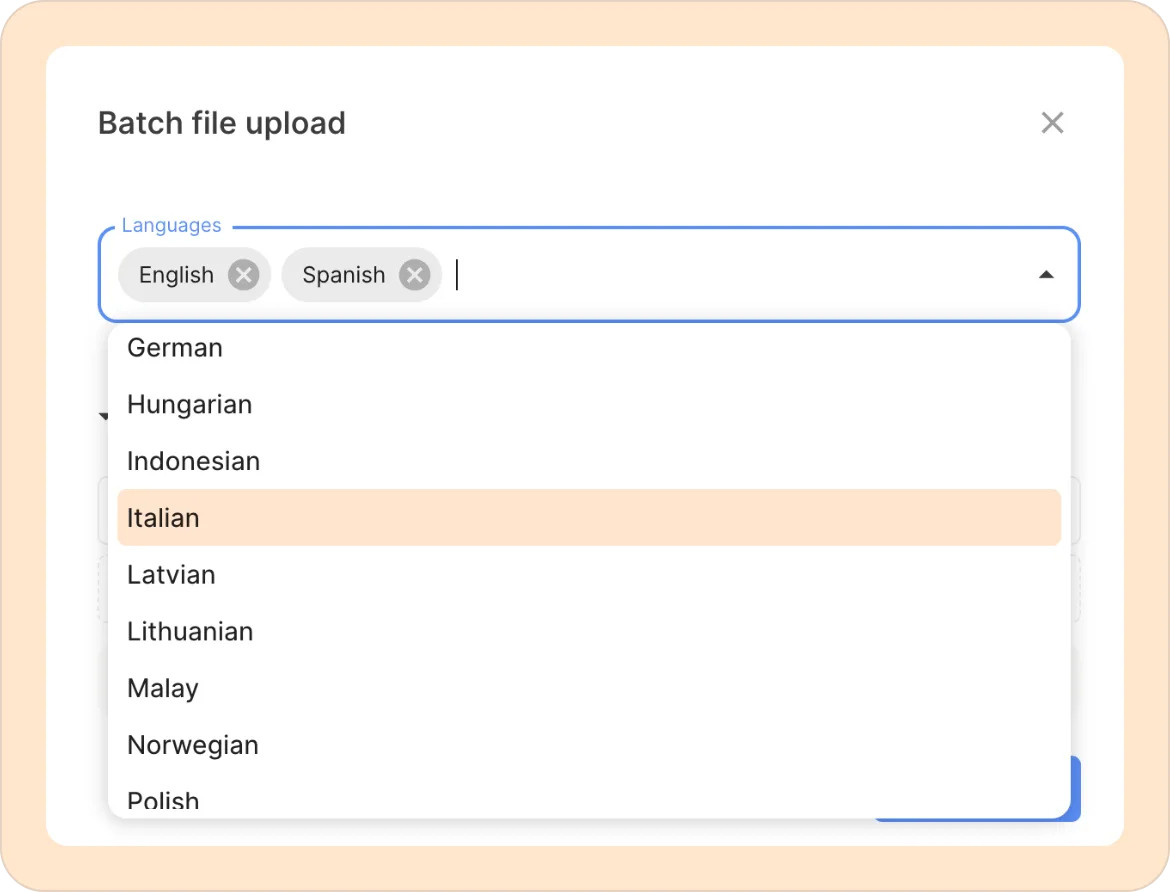
Upload the footage, select the language, and get a timestamped transcript in that language. Reduct transcribes 90+ languages, and every line links back to the moment in the video.
2. Side-by-side translation
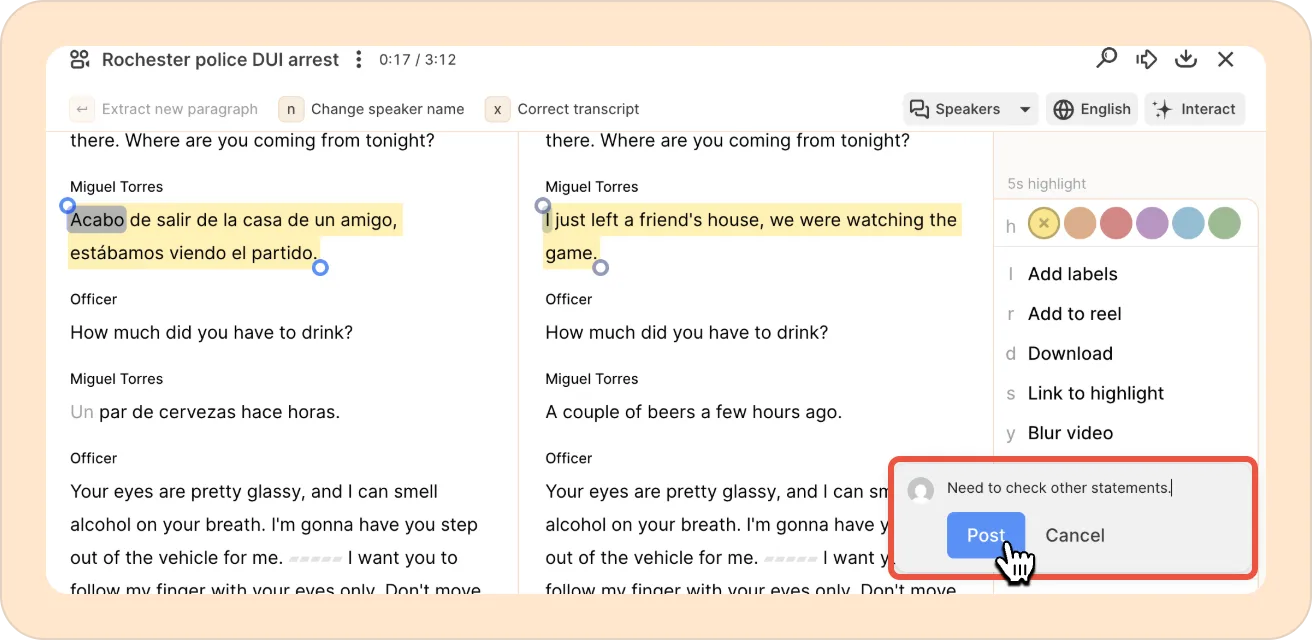
Open the side-by-side view to read the original transcript on the left and the English translation on the right. Click any word in the translation to jump to that moment in the recording.
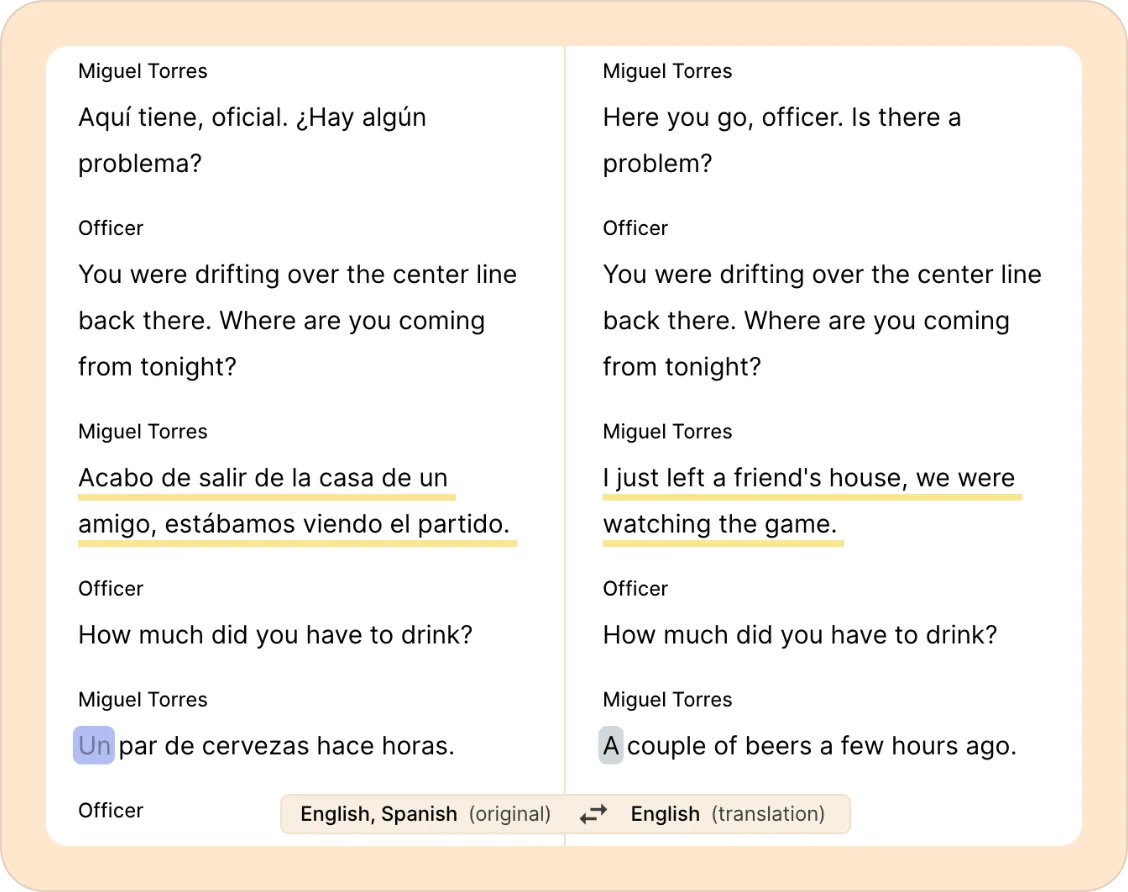
Keeping the original in view helps you spot ambiguous phrases that need a closer listen.
3. Find, highlight & organize key evidence
Reduct lets you search the translated text across every recording for names or phrases.
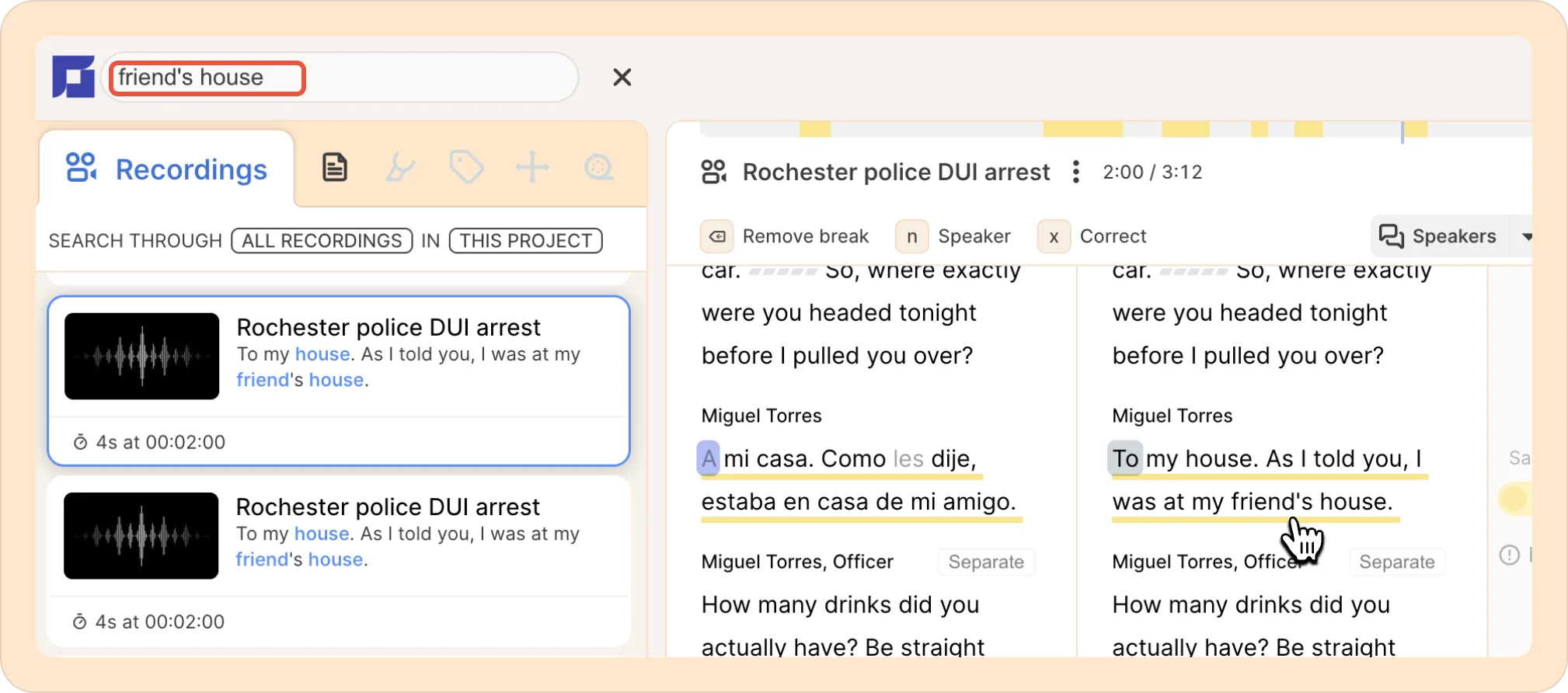
You can find and label the important moments, flag the ones you want an interpreter to review, and add comments as you go.
Understand your footage on day one
Our translation gets you to the evidence that builds your case. Anything headed into a motion or in front of a jury may still need a certified interpreter.
That’s where your prep can make all the difference. Interpreters can focus on the minutes you’ve already flagged and use their limited time where it's most needed.
LA County is one public defender office, but this pattern shows up wherever bodycams do. The footage keeps growing, and the communities you serve may speak many languages. If you want to see this workflow, book a call with our team and we’ll guide you through it, step by step.
TALK TO A PUBLIC DEFENDER
We're on your team
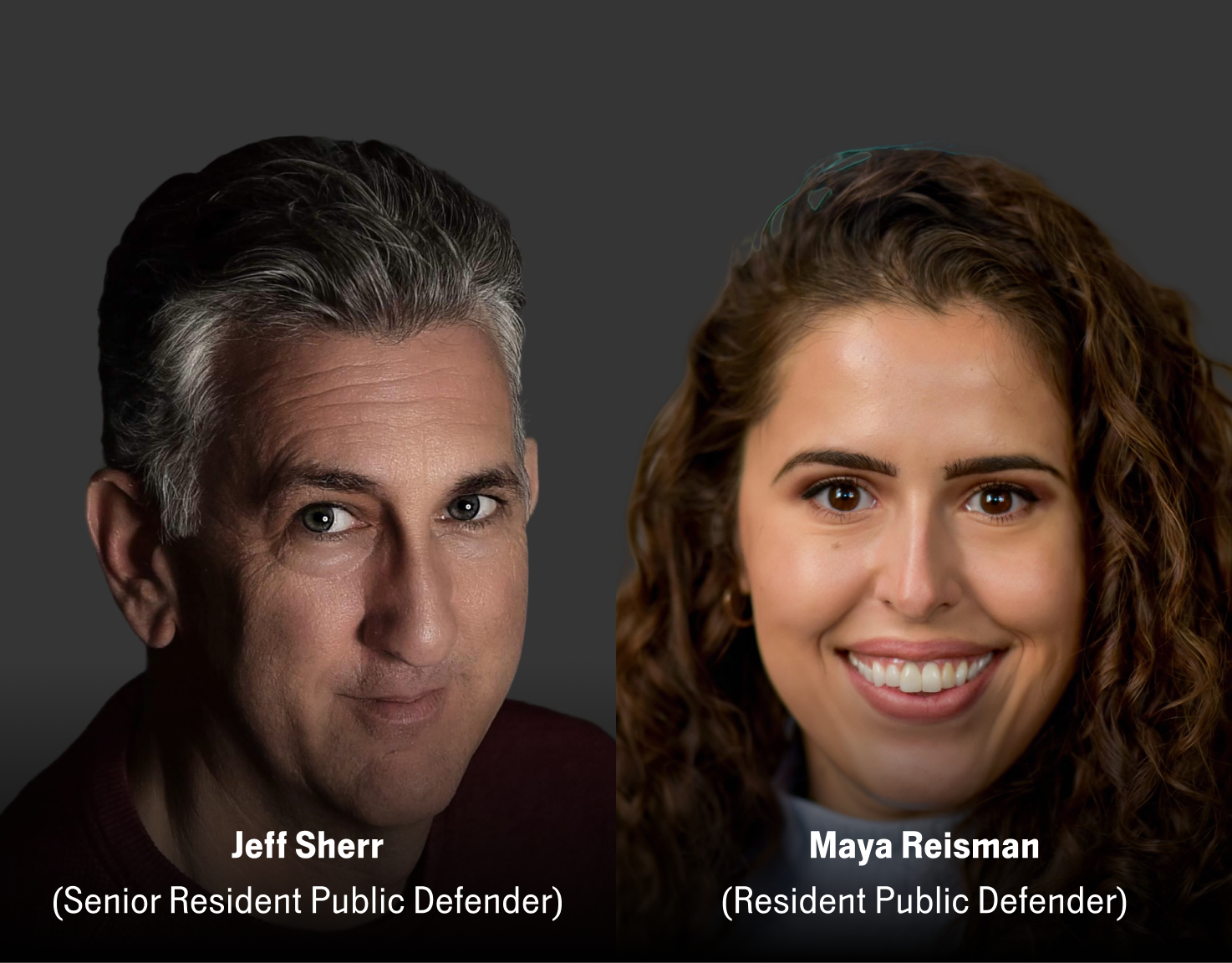
We believe the people building tools for defenders should understand what it actually takes to be one. So we have former public defenders helping us build the product. Have a question about whether Reduct fits your office? We’d love to talk to you.